

Creating a safe space in Haiti’s schools
Cassandre Regnier from our partner Summits Education explains how Mary’s Meals is offering children stability, safety, and hope amid the worsening crisis in Haiti.
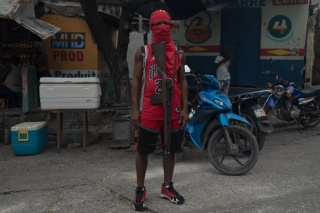
Almost five years on from the assassination of former president Jovenel Moïse in 2021, escalating gang violence, political instability, and rising poverty continue to affect the people of Haiti.
Around 90% of the capital Port-au-Prince is controlled by gangs and organised crime groups. More than 1.4 million people have been internally displaced and over half the population do not have enough to eat.
We talk to Cassandre Regnier, Deputy Director of Summits Education – one of our partners in Haiti – about how, together, we are keeping our school feeding programme running in one of the world’s most dangerous countries.
What are the challenges affecting children and families in the areas where we deliver our programme?
Gang-related violence, rising poverty, food insecurity, and a lack of access to education pose significant challenges to children and families in the Central Plateau region of the country where deliver the school feeding programme.
In the past year we’ve faced rising gang activity, blocked roads, increased inflation, and crumbling supply chains. On some days, fuel has been impossible to find. On others, schools we feed in have had to temporarily close – not because we wanted them to – but because it simply wasn't safe to keep them open. And yet, every single day that it was possible, children still showed up to school because they believe in the promise of a better future.
How has the escalation of violence impacted the school feeding programme and the lives of the children that receive Mary’s Meals?
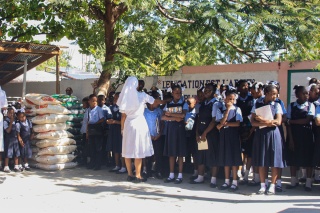
In March 2025, gangs attacked and took control of Mirebalais, a town in a previously peaceful area of the Central Plateau from where we operated the school feeding programme. As the violence spread, gangs burned public infrastructure, released 500 prisoners, and killed civilians, including two nuns. Our headquarters and main warehouse were forced to close as the city emptied in panic. Families fled in search of safety, including our staff who left behind their belongings – and some, their homes – to seek refuge in nearby towns that were safer.
Following the events of March 2025, we secured a temporary location and shifted operations to ensure that the feeding programme could continue with as little disruption as possible, all while navigating these extreme challenges outside of work.
Once we knew our staff were safe, we adopted a hybrid distribution model and decentralised our operations team to stay close to the schools even when roads were unsafe or communications were disrupted. It wasn't always perfect, but it was an attempt to keep our promise to the students and we made it happen.
Currently, we are finding it extremely challenging to get food to children in their place of education. Finding suppliers with the quantity and quality of food at the right time is increasingly difficult. Transporting food is risky. Some schools have become impossible to access safely due to gang presence, and schools in the worst-affected areas are facing temporary and even long-term closures. Families are displaced, with many afraid to send their children to school.
How do daily school meals help children in Haiti?
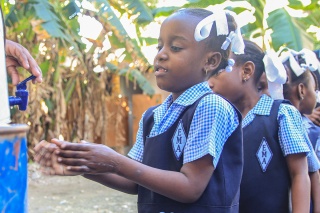
With children facing record levels of hunger and poverty in Haiti, failing supply chains mean that families are finding it increasingly difficult and extremely expensive to buy food and other goods. Yet, despite the violence and disruption, Summits Education and Mary’s Meals continue to provide hope and a future for children in Haiti.
To be honest about what’s at stake: for many families, the question is no longer what will we eat today, but will we eat at all? And many children are carrying trauma that makes them afraid to leave home, afraid to walk to school, afraid of what they might see or hear on the way.
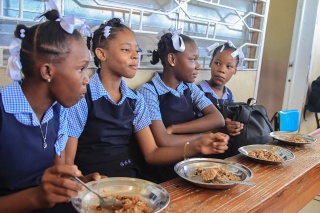
One truth keeps showing itself: a daily meal is what brings them back, day after day, to a place of education and protection. It gives parents one reason to say yes, and it gives children one reason to try to sit in a classroom, to focus, and to keep believing in something beyond survival.
What is your message to encourage the world to support Haiti?
If you’re wondering whether your support matters. It does! Your support not only provides food, it’s about attendance, learning, safety, and the chance for a generation to grow into the leaders Haiti desperately needs.
Thank you for standing with Haiti, and please keep standing with us so we can keep that promise, one meal and one school day at a time.
Haiti’s children are running out of options. Hungry and surrounded by violence, many are being recruited into armed gangs – lured by the promise of food.
Right now, your gift does more than provide vital nutrition – it helps children stay in school, where they can learn and grow into the leaders that will transform Haiti’s future. Please donate today and, together, one meal at a time, we can stand with Haiti’s children and restore their belief in a life beyond the chaos.
Cassandre Regnier is Deputy Director at Summits Education, one of our partners in Haiti. She helps to ensure successful delivery of our school feeding programme in the Central Plateau region of the country.
