

Why Day of the African Child is important to Mary's Meals
The Day of the African Child remembers the sacrifice made by thousands of African students in defence of their right to quality education
On 16 June 1976, thousands of students in Soweto, South Africa, protested for their right to a fair and quality education. Many lost their lives in the violence that followed. Day of the African Child honours their courage and highlights the importance of ensuring every child can access education. Today, Mary’s Meals supports that vision by providing daily school meals to more than 2,654,000 children in 10 countries across Africa, helping children attend school and supporting their readiness to learn.
What is Day of the African Child?
Day of the African Child, established by the African Union in 1991, is not only a commemoration but also a call to action and a moment of reflection on the rights of African children, with a particular focus on education and a different theme highlighted each year.
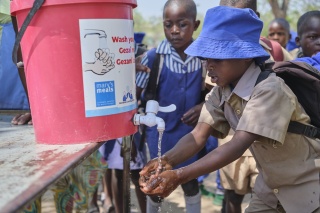
This year, the African Committee of Experts on the Rights and Welfare of the Child has chosen the theme: “Ensuring universal access to water, sanitation and hygiene for every child in Africa (1).”
How Mary’s Meals supports the rights of African children
We provide daily nutritious school meals to more than three million children in 16 countries worldwide. The vast majority of these children are in sub-Saharan Africa, although we also operates in Asia, Latin America, and the Middle East. Our work encourages children experiencing extreme poverty and hunger to attend school or an informal place of learning, something that would not be possible without access to safe and reliable water sources.
Why access to water matters for education
Education is a fundamental right of every child, as is clean and safe water. Research shows that reliable daily meals served in school help to reduce hunger, increase energy, increase enrolment and attendance, and enable children to concentrate better in class.
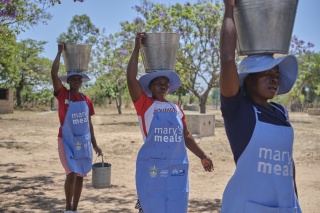
However, lack of water can still be a barrier to schooling, as illustrated by Nyawa, a pupil at Nkhuzyeni Primary School in Zambia. Nyawa lives close to her school but must fetch water and complete household chores before attending classes.
Nyawa says: “I go with my friends to fetch water, never alone. There are bushes and thick vegetation along the way, and there are risks from both from people and animals."
Supporting school feeding with safe water and hygiene
In Madagascar, families whose children receive daily meals in school report that the re-enforcing of good handwashing and hygiene habits as part of the Mary’s Meals programme is having a notable impact at home. A safe water supply is an essential element of a successful school feeding programme and while water projects is not a specific focus of our work, some of our delivery partners run complementary water projects alongside the school feeding programme.
According to the latest UNESCO data, approximately 118 million children, adolescents and young people in Africa are currently out of school (2). While this challenge remains significant, every school meal served helps to remove barriers to education and create opportunities for children to learn.
In 2025, Mary’s Meals reached more than 638,000 additional children, supporting over 1,280 schools across our school feeding programmes in Africa. But there is still much more to do.
To mark Day of the African Child, we're urging people from all backgrounds to support our work and help us expand our programmes across Africa, creating brighter futures for millions of children. Find out how you can get involved and make a difference today.
